
Trump demands AI hubs pay local energy dividends
The President is pressing major tech firms to share excess power and financial benefits with nearby residents to reduce community opposition to new data center construction.
By Noah Dvorak ·
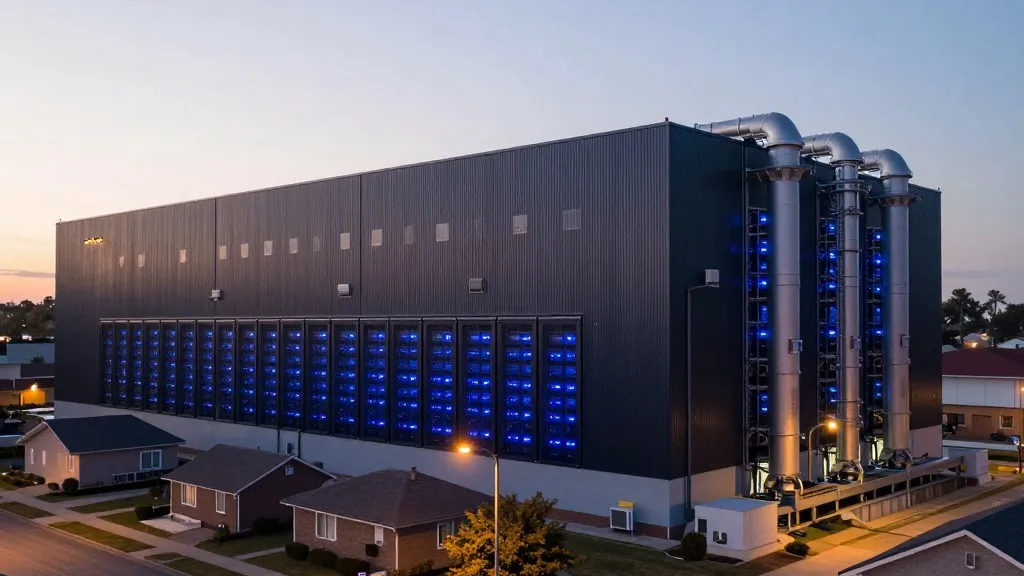
President Donald Trump has directed major artificial intelligence developers and data center builders to provide financial and energy dividends to the communities surrounding their facilities. In a recent statement on Truth Social, the President outlined a strategy to make these massive infrastructure projects more acceptable to local residents. He emphasized that these companies should not only generate their own electricity but also return excess power to the local grid. The goal is to prevent rising energy bills for nearby households and potentially lower overall costs in the area.
This move comes as local communities across the United States increasingly protest the rapid expansion of AI data centers. Small towns and rural areas have expressed frustration over the significant impact these facilities have on their daily lives. Residents frequently cite rising electricity rates, persistent noise pollution, and strain on local water supplies as primary concerns. Additionally, issues such as air quality degradation and land use changes have become points of contention in many regional discussions.
The administration views this initiative as a way to balance the national push for technological advancement with local economic fairness. By ensuring that the entities driving the AI arms race against China contribute directly to the neighborhoods they affect, the White House hopes to build broader support for continued construction. The specific mechanism for these dividends remains under development, but the focus on energy suggests that a portion of the payments may help offset the increased utility costs borne by families living near these high-demand sites.
Previously, the administration issued orders requiring these companies to become self-sufficient in power generation. This new directive builds on that foundation by suggesting that any surplus energy produced could be sold back to the community. A recently passed act already requires data centers to cover the costs of necessary grid upgrades. This measure is designed to ensure that the financial burden of infrastructure improvements does not fall on local taxpayers through higher property or utility rates.
In his post, President Trump highlighted the changing public perception of these facilities when financial agreements are in place. He noted that data centers which were once highly unpopular in specific regions have become much more accepted once a deal was struck. The President urged industry leaders to prioritize these negotiations to accelerate the building process. His message was direct, calling on companies to make deals and get the projects built to maintain momentum in the sector.
However, questions remain about the long-term viability of this approach. Critics point out that calling these payments a dividend is unusual for companies that are still in the early stages of recouping their massive construction costs. Many new data center builds are not yet profitable, which raises doubts about the immediate flow of funds to local residents. The economic benefit is only one part of the broader equation, as environmental and social concerns persist.
The primary method of power generation for these new sites in the short term relies heavily on gas-powered generators. These units are often described as noisy and less efficient than conventional power plants. For residents living in close proximity, the local impact of these machines may still be a significant drawback, even if the energy costs are subsidized. Other, cleaner forms of power generation typically take longer to implement, meaning the immediate community experience may not improve drastically in the near term.
The success of this mandate will depend on how strictly it is enforced and how the dividends are calculated. Without clear requirements, industry observers suggest that companies may seek the path of least resistance. The administration aims to turn potential opposition into partnership, but the outcome will hinge on whether the financial incentives are substantial enough to outweigh the environmental and logistical challenges faced by local communities.
As the AI infrastructure race continues, the relationship between tech giants and their neighbors will be closely watched. The administration believes that a fair financial deal can smooth the path for new construction. Whether this strategy will truly win over skeptical residents or simply provide a temporary buffer against rising costs remains to be seen in the coming months.
Source: Tom's Hardware · original report published