Tesla's Q3 Profit Squeezed by AI Spending and Battery Limits
While margins recovered from last quarter's lows, Tesla's bottom line shrank as heavy investments in artificial intelligence and robotics outpaced growth in vehicle sales.
By Gabriel Fedorov ·
Tesla reported its third-quarter financial results after the market closed on Tuesday, revealing a company caught between recovering margins and aggressive expansion costs. The electric vehicle maker delivered $28.05 billion in revenue, a figure that remained flat compared to the same period last year and aligned closely with Wall Street expectations. While the top-line number showed stability, the underlying story was one of financial strain, as operating income plummeted 56% year-over-year. This significant drop underscores a strategic pivot where Tesla is prioritizing long-term technological bets over immediate profitability.
The numbers tell a mixed story of recovery and expenditure. Non-GAAP earnings came in at $0.48 per share, beating the consensus estimate of $0.45 but still falling 4% from the previous year. On a GAAP basis, net income dropped 43% to $787 million. The most concerning metric for investors was operating margin, which fell to 2.6% from 5.8% a year earlier. Despite this, it represented a substantial improvement from the 1.4% operating margin posted in the second quarter, suggesting that the worst of the recent margin compression may be behind the company.
The primary driver of the profit decline was a sharp increase in operating expenses, which rose 39% to $4.78 billion. Research and development spending surged 69% to $2.76 billion as Tesla poured resources into its "Super Intelligence" initiative, the Optimus robot, and the Cybercab. Additionally, stock-based compensation reached $1.17 billion, up from $663 million a year ago, largely due to the 2025 CEO pay package. Capital spending also more than doubled to $4.73 billion, reflecting the heavy infrastructure buildout required for these new ventures.
Tesla’s automotive performance showed signs of stabilization, with auto gross margin excluding regulatory credits rising to 18.1% from 16.3% in the previous quarter. The company attributed this improvement to a better regional and product mix, along with increased revenue from Full Self-Driving (FSD) subscriptions. However, regulatory credits contributed only $113 million to the bottom line, down 73% from the prior year, indicating that this revenue stream is no longer a major cushion. Meanwhile, the energy segment saw revenue dip 16% to $2.88 billion due to tariff-related refunds, even as deployment volumes increased.
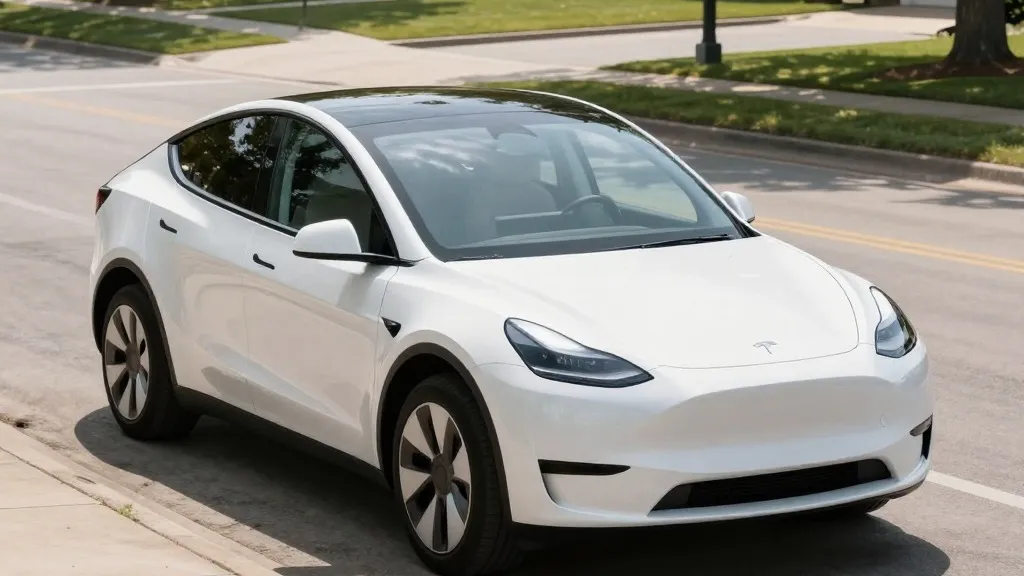
Management pointed to battery availability as the key constraint on vehicle sales, noting that it ended the quarter with its largest passenger vehicle backlog in four years. Despite this supply-side explanation, deliveries fell 2.1% year-over-year, and average selling prices continued to decline. Tesla also reported that active FSD subscriptions reached 1.74 million, a 67% increase, while its Robotaxi service accumulated nearly 2 million unsupervised miles. The company’s cash position remains robust, with $45.4 billion in cash and investments, providing ample runway for its ambitious spending plans.
The stakes for Tesla going into the fourth quarter are high, particularly regarding its capital expenditure targets. Management had previously guided for more than $25 billion in spending for the full year, but the company has only committed $13.01 billion through the first nine months. To meet that target, Tesla would need to spend approximately $12 billion in the final quarter alone, more than double its previous quarterly highs. If spending does not accelerate, the 2026 investment plan may quietly slip into 2027, a shift that could impact the pace of its technological rollout.
For investors, the balance sheet provides some comfort, with free cash flow at $1.53 billion, a recovery from the negative $1.09 billion seen in the second quarter. However, this positive cash flow was partly flattered by lower spending rather than pure operational efficiency. The company also booked a $288 million unrealized gain on its bitcoin holdings, which helped cushion the GAAP net income, though this was partly offset by a $142 million loss on its SpaceX equity investment.
As Tesla moves forward, the focus will shift to whether it can convert its massive R&D investments into tangible product improvements that justify current valuations. The earnings call scheduled for later today will provide further insight into management’s outlook. For now, the company appears to be betting that its dominance in autonomy and robotics will outweigh the short-term pain of shrinking profits, a gamble that will be closely watched by the markets in the coming months.
Source: Electrek · original report published