Lula defeats Flávio Bolsonaro in Brazil runoff, prompting legal challenge
The incumbent secured 64 million votes despite a chaotic extension, while his rival seeks to annul the results.
By Noah Dvorak ·
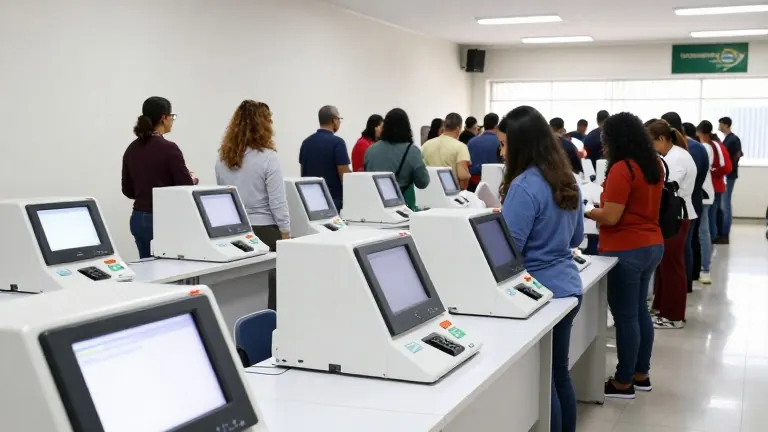
President Luiz Inácio Lula da Silva has won reelection in Brazil's presidential runoff, a result that his rival, Senator Flávio Bolsonaro, intends to contest in court. The victory places Lula in position to serve a fourth non-consecutive term, beginning on Jan. 5, 2027, while Bolsonaro prepares a legal fight that could bring the country's two dominant political factions into direct conflict.
Lula secured more than 64 million votes, narrowly outpacing Bolsonaro, who received just under 60 million. The margin amounted to nearly 4% of the total. At a news conference on Sunday, Bolsonaro announced his plan to request an annulment of the election. He cited the chaotic extension of voting hours that occurred at the request of both candidates. Legal experts note it is unclear which specific legal avenue he will pursue to overturn the result.
The extension itself was decided by a Supreme Court justice minutes before polls were scheduled to close at 5 p.m. on Sunday. Lula requested the extension due to public transportation issues in São Paulo and Salvador, two of his key strongholds. Bolsonaro requested it because of heavy rains in the south, a region where he had won the first round by a strong margin. The late timing meant many polling stations did not receive the news until they were already wrapping up operations.
A surge in voter turnout was the decisive factor in the second round. A total of 14.1 million additional voters participated in the runoff compared to the first round. Analysts estimate that three-quarters of these new voters supported Lula. This group included former non-voters, those who had cast blank ballots, and supporters of third-party candidates. The first round had set a record for abstentions, while the second round recorded the lowest number of abstentions in recent history.
Lawmaker André Janones managed Lula's digital campaign, using a WhatsApp channel called “Lula's Army” to mobilize voters. The channel gathered almost 11 million people and coordinated social media messaging. Professor Oliver Stuenkel of Fundação Getulio Vargas stated that the campaign embraced an aggressive, constant style of politics to counter Bolsonaro's approach. The campaign also pressured Meta to address alleged algorithmic bias, leading Brazil's top electoral court to rule on Oct. 15 that the company must ensure equal treatment of candidates.
President Donald Trump suggested on Monday that the election was rigged, though he provided no evidence to support the claim. “Elections have to be indisputable and it looked very bad to me,” Trump told reporters. He added that the way the votes were tabulated gave the process a “very bad look.”
Kassio Nunes, president of Brazil’s electoral authority and a Supreme Court appointee of former President Jair Bolsonaro, recognized Lula’s victory on Sunday. Brian Winter, an editor-in-chief at Americas Quarterly, said that Brazilian power brokers are closing ranks behind Lula to avoid a truly contested election. Winter noted that while the Bolsonaro family can make life difficult for the new government, the institutional weight currently favors Lula.
Source: ABC News