
Arctic Trade Volumes Surge Past 2025 Total
China and Russia expanded their partnership on Northern Sea Route logistics, pushing 2026 transit figures above last year's annual total by September.
By Megan Adeyemi ·
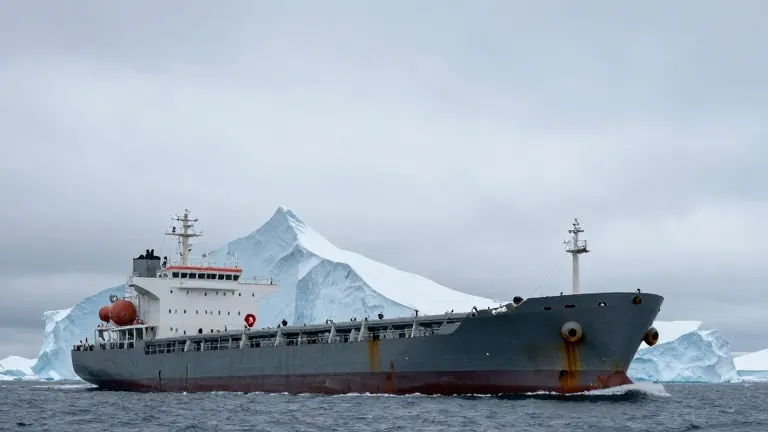
Arctic shipping volumes have already surpassed the entire 2025 navigation season. By the end of September 2026, the Northern Sea Route recorded 104 confirmed transit voyages carrying an estimated 3.7 million tonnes of cargo. This figure exceeds the 3.2 million tonnes recorded for the full 2025 season, according to data from the Centre for High North Logistics.
Last week, Moscow and Beijing agreed to expand freight traffic along Arctic shipping corridors. The pact includes increased services between their ports and deeper cooperation on building polar vessels. This move followed the European Union's release of a new Arctic strategy designed to counter growing Russian and Chinese influence in the region.
David Roche, a strategist at Quantum Strategy & Geonomics, noted that the route's value lies in the deepening economic dependence between the two nations. "The significance of the arctic route is for Russian energy shipments to China, which will increase China's control over Russia in terms of Russia's dependence on China to sell its energy to compensate for losses of its gas markets in Europe," Roche said.
Russia controls the Northern Sea Route, holding authority over shipping permits, transit fees, and a fleet of nuclear icebreakers. China supplies the cargo, vessels, and industrial capacity. Europe faces limitations in icebreaker capacity and infrastructure, which restricts its ability to challenge this partnership despite being a major destination market.
Traffic through the route is accelerating, but the Arctic remains a small part of global trade. Roche estimates Arctic trade accounts for roughly 0.3% of global shipping today. A study in the WMU Journal of Maritime Affairs projects that melting polar ice could increase the route's annual transit capacity to between 127 million and 463 million tonnes by 2050.
Commercial hurdles persist for Western operators. Daeijin Lee, former global head of research at Fertmax FZCO, stated that sanctions and insurance complications make the route less attractive for Western firms than for Chinese companies. "The Arctic gives diversification, not independence," Lee said.
Matthew Wright, an analyst at Kpler, said the route is poorly suited to replacing established corridors because operators need reliable, year-round services. The route is expected to develop as a seasonal express path for high-value cargo rather than a substitute for Suez.
Source: CNBC