Saudi Defense Chief Lands in Tehran to Stress Test Mecca Pact
Khalid bin Salman’s arrival marks the first major diplomatic engagement between the new trilateral alliance and Iran amid ongoing regional conflict.
By Megan Adeyemi ·
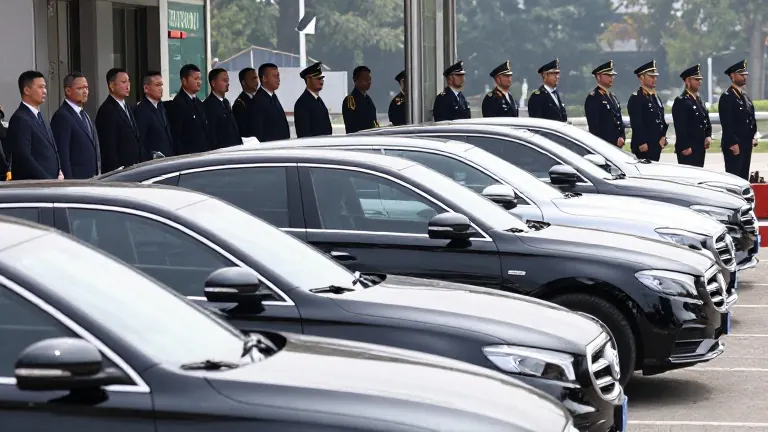
Saudi Defense Minister Khalid bin Salman arrived in Tehran on October 26 to lead a delegation for talks with Iran.
The meeting serves as a practical examination of the Mecca Joint Defense Agreement, a trilateral security pact signed in August 2026. The alliance includes Saudi Arabia, Turkey, and Pakistan. Questions have persisted regarding whether the pact possesses the operational capacity to enforce its collective defense clauses. Houthi attacks on Saudi Arabia previously raised doubts about whether Turkey and Pakistan would intervene militarily on behalf of Riyadh.
The delegation includes high-ranking officials from the other two member states. Pakistan’s army chief, Field Marshal Asim Munir, and Ibrahim Kalin, the head of Turkish intelligence, are also present in Iran. These figures represent significant military and security leadership within the region. Munir has recently visited Iran. Their presence suggests the talks aim to produce tangible outcomes rather than merely symbolic gestures.
Iranian Foreign Ministry Spokesperson Esmaeil Baghaei stated on October 26 that hosting these senior officials is a key step toward building regional diplomacy. He argued that such cooperation could contribute to lasting stability and security in the Middle East. Baghaei emphasized that the region must work together to achieve this stability. This messaging aligns with Iran’s preference for managing regional issues without direct United States military intervention. However, the United States and Israel have both stated publicly that their war with Iran will continue.
The timing of the talks coincides with political developments in Israel. President Donald Trump has endorsed the continuation of the Israeli prime minister’s leadership to maintain the fight against Iran. This stance implies that the United States views its partnership with Israel as centered on specific political figures. Many Israelis view the US-Israel relationship as broader than any single leader. They generally agree on the need to confront Iran. Reports from Jerusalem indicate that the Israeli military was hesitant to conduct strikes immediately before recent elections. The high-level nature of the current Tehran delegation may suggest that the Mecca pact members believe war can be postponed in the short term.
The Mecca Joint Defense Agreement was signed on August 7, 2026, in Mecca. Saudi Crown Prince Mohammed bin Salman, Turkish President Recep Tayyip Erdogan, and Pakistani Prime Minister Shehbaz Sharif signed the document. The pact includes a clause stating that an armed attack on one member is considered an attack on all three. It also mandates expanded military cooperation, joint exercises, intelligence sharing, and defense technology development. A Strategic Political and Defense Committee was established to coordinate these efforts. Turkey published the full text of the agreement in October as it moved toward parliamentary ratification.
The alliance unites three military powers, including nuclear-armed Pakistan and NATO member Turkey. Critics have compared the pact to NATO, but the two organizations differ in history and function. NATO has not engaged in many wars since its founding in 1949. It primarily serves to bring together Western democracies for training and shared operations. The Mecca pact may similarly focus on shared interests and diplomatic consensus rather than immediate battlefield coordination. Saudi Arabia is historically cautious, as are Turkey and Pakistan, despite their recent military activities. Monarchies and conservative states tend to prioritize stability over aggressive expansion.
Saudi Arabia’s Deputy Minister for Public Diplomacy, Dr. Rayed Krimly, posted on Monday that Prince Khalid bin Salman is leading the delegation to help ease regional tensions. The meeting will take place with Iranian President Masoud Pezeshkian and Mohsen Rezaei, the Secretary-General of the Supreme National Security Council. Riyadh views this engagement as part of ongoing efforts to de-escalate the current situation and encourage diplomatic solutions. The outcome of these talks will reveal whether the Mecca pact functions as a diplomatic framework or a military guarantee.
Source: The Jerusalem Post